> ## Documentation Index
> Fetch the complete documentation index at: https://auth0-docs-event-stream-action-templates.mintlify.site/llms.txt
> Use this file to discover all available pages before exploring further.
# Login
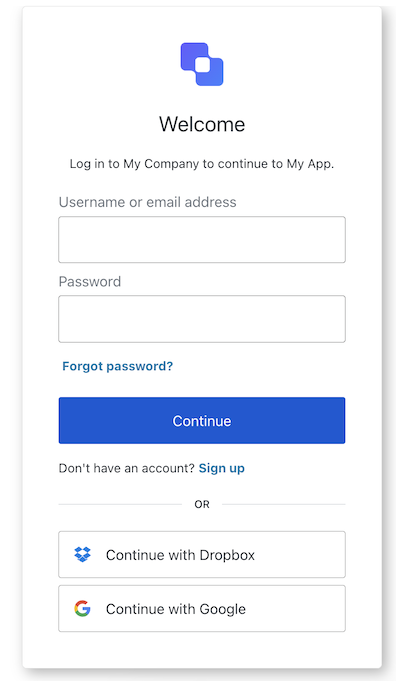
> Describes all the hooks and methods available to customize the Universal Login `login` screen.
The `login` screen collects the user's identifier and password. Depending on your tenant, this identifier can be an email, phone number, or username. It also supports authentication via federated identity providers.
## Import
Each screen has its own set of hooks and methods. The SDK supports **partial import** and **root import** for each screen.
* Using partial import allows you to include only the code you need for your specific use case.
* Using root import allows you to load all screens from a single bundle, which is useful when you want a unified build to handle all possible screens.
```jsx Import Example theme={null}
// root import
import { useLogin } from '@auth0/auth0-acul-react';
// partial import
import {
useLogin,
// Context hooks
useUser,
useTenant,
useBranding,
useClient,
useOrganization,
usePrompt,
useScreen,
useTransaction,
useUntrustedData,
// Common hooks
useCurrentScreen,
useAuth0Themes,
useErrors,
// Utility hooks
useLoginIdentifiers,
useChangeLanguage,
// Methods
login,
federatedLogin,
pickCountryCode,
} from "@auth0/auth0-acul-react/login";
function LoginForm() {
const { login, federatedLogin } = useLogin();
return (
);
}
```
## Context Hooks
Screen-scoped hooks that provide read-only access to Auth0 context data on the `login` screen. Import them from `@auth0/auth0-acul-react/login`.
() => BrandingMembers}>
This hook provides branding configurations, such as logo, colors, and theme settings displayed on the `login` screen.
```jsx Example theme={null}
import { useBranding } from '@auth0/auth0-acul-react/login';
function CustomTheme() {
const branding = useBranding();
}
```
() => ClientMembers}>
This hook provides client-related configurations, such as `id`, `name`, and `logoUrl`, for the `login` screen.
```jsx Example theme={null}
import { useClient } from '@auth0/auth0-acul-react/login';
function AppInfo() {
const client = useClient();
}
```
() => OrganizationMembers}>
This hook provides information about the user's Organization if the login is Organization scoped. Returns `null` when no Organization context is present.
```jsx Example theme={null}
import { useOrganization } from '@auth0/auth0-acul-react/login';
function OrgSelector() {
const organization = useOrganization();
if (!organization) {
return
No organization context
;
}
}
```
() => PromptMembers}>
This hook contains data about the current prompt in the authentication flow.
```jsx Example theme={null}
import { usePrompt } from '@auth0/auth0-acul-react/login';
function FlowInfo() {
const prompt = usePrompt();
}
```
() => ScreenMembersOnLogin}>
This hook contains details specific to the `login` screen, including its configuration and context.
```jsx Example theme={null}
import { useScreen } from '@auth0/auth0-acul-react/login';
function ScreenDebug() {
const screen = useScreen();
}
```
() => TenantMembers}>
This hook contains data related to the tenant, such as `id` and associated metadata.
```jsx Example theme={null}
import { useTenant } from '@auth0/auth0-acul-react/login';
function TenantInfo() {
const tenant = useTenant();
}
```
() => TransactionMembersOnLogin}>
This hook provides transaction-specific data for the `login` screen, such as active connections, available login methods, and current flow state.
```jsx Example theme={null}
import { useTransaction } from '@auth0/auth0-acul-react/login';
function TransactionInfo() {
const transaction = useTransaction();
}
```
() => UntrustedDataMembers}>
This hook handles untrusted data passed to the screen, such as a prefilled username from URL parameters.
```jsx Example theme={null}
import { useUntrustedData } from '@auth0/auth0-acul-react/login';
function PrefilledForm() {
const untrustedData = useUntrustedData();
}
```
() => UserMembers}>
This hook provides details of the active user, including `username`, `email`, and available authentication methods.
```jsx Example theme={null}
import { useUser } from '@auth0/auth0-acul-react/login';
function UserProfile() {
const user = useUser();
}
```
LoginMembers}>
This hook returns all methods and context available on the `login` screen.
## Methods
This method initiates authentication via a federated identity provider, such as Google or GitHub.
```jsx Example theme={null}
import { useLogin } from '@auth0/auth0-acul-react/login';
function SocialButton() {
const { federatedLogin } = useLogin();
return (
);
}
```
**Method Parameters**
[FederatedLoginPayloadOptions](/docs/libraries/acul/react-sdk/API-Reference/Types/interfaces/FederatedLoginPayloadOptions).
The social connection name to use (e.g. `google-oauth2`, `github`).
This method submits the user's credentials to complete authentication on the `login` screen.
```jsx Example theme={null}
import { useLogin } from '@auth0/auth0-acul-react/login';
function LoginForm() {
const { login } = useLogin();
return (
);
}
```
**Method Parameters**
[LoginPayloadOptions](/docs/libraries/acul/react-sdk/API-Reference/Types/interfaces/LoginPayloadOptions).
The username or email to authenticate with.
The password for authentication.
Captcha value required when bot detection is enabled on the tenant.
Additional custom fields prefixed with `ulp-` (for example, `'ulp-custom-field'`).
This method navigates to the country code picker for phone-based login flows.
```jsx Example theme={null}
import { useLogin } from '@auth0/auth0-acul-react/login';
function PhoneLogin() {
const { pickCountryCode } = useLogin();
return (
);
}
```
**Method Parameters**
[CustomOptions](/docs/libraries/acul/react-sdk/API-Reference/Types/interfaces/CustomOptions).
Additional custom fields prefixed with `ulp-` (for example, `'ulp-custom-field'`).
## Common/Utility Hooks
useAuth0Themes} type="Hooks">
This hook gets the current theme options with flattened configuration from branding context.
useChangeLanguage} type="Hooks">
This hook returns a function for changing the display language on the current ACUL screen.
useCurrentScreen} type="Hooks">
This hook gets the current screen context and state.
useErrors} type="Hooks">
This hook reads and manages server, client, and developer errors on the screen.
useLoginIdentifiers} type="Hooks">
This hook returns a list of active identifier types (`email`, `phone`, `username`) in the current flow.
 ## Import
Each screen has its own set of hooks and methods. The SDK supports **partial import** and **root import** for each screen.
* Using partial import allows you to include only the code you need for your specific use case.
* Using root import allows you to load all screens from a single bundle, which is useful when you want a unified build to handle all possible screens.
```jsx Import Example theme={null}
// root import
import { useLogin } from '@auth0/auth0-acul-react';
// partial import
import {
useLogin,
// Context hooks
useUser,
useTenant,
useBranding,
useClient,
useOrganization,
usePrompt,
useScreen,
useTransaction,
useUntrustedData,
// Common hooks
useCurrentScreen,
useAuth0Themes,
useErrors,
// Utility hooks
useLoginIdentifiers,
useChangeLanguage,
// Methods
login,
federatedLogin,
pickCountryCode,
} from "@auth0/auth0-acul-react/login";
function LoginForm() {
const { login, federatedLogin } = useLogin();
return (
);
}
```
## Context Hooks
Screen-scoped hooks that provide read-only access to Auth0 context data on the `login` screen. Import them from `@auth0/auth0-acul-react/login`.
## Import
Each screen has its own set of hooks and methods. The SDK supports **partial import** and **root import** for each screen.
* Using partial import allows you to include only the code you need for your specific use case.
* Using root import allows you to load all screens from a single bundle, which is useful when you want a unified build to handle all possible screens.
```jsx Import Example theme={null}
// root import
import { useLogin } from '@auth0/auth0-acul-react';
// partial import
import {
useLogin,
// Context hooks
useUser,
useTenant,
useBranding,
useClient,
useOrganization,
usePrompt,
useScreen,
useTransaction,
useUntrustedData,
// Common hooks
useCurrentScreen,
useAuth0Themes,
useErrors,
// Utility hooks
useLoginIdentifiers,
useChangeLanguage,
// Methods
login,
federatedLogin,
pickCountryCode,
} from "@auth0/auth0-acul-react/login";
function LoginForm() {
const { login, federatedLogin } = useLogin();
return (
);
}
```
## Context Hooks
Screen-scoped hooks that provide read-only access to Auth0 context data on the `login` screen. Import them from `@auth0/auth0-acul-react/login`.